Picture yourself stepping into a sun-drenched villa overlooking the azure waves of the Aegean Sea. Greek interior design isn’t just about aesthetics; it’s an invitation to experience a lifestyle steeped in history and harmony. With its clean lines, vibrant colors, and a touch of rustic charm, this style effortlessly combines elegance with comfort.
Overview Of Greek Interior Design
Greek interior design reflects a harmonious balance of function and beauty. Clean lines characterize this style, creating spaces that feel open and inviting. Vibrant colors play a significant role, often incorporating shades inspired by nature—think azure blues and earthy terracottas. Elements of rustic charm contribute to an overall warm atmosphere.
Natural materials dominate Greek interiors, including wood, stone, and clay. Stone floors and wooden ceilings enhance the authenticity of spaces, while clay accents provide additional texture. Cultural heritage significantly influences furnishings, often featuring handcrafted items that tell a story.
Furniture in Greek design exhibits simplicity and comfort. Sofas and chairs often consist of muted fabrics and classic shapes. Decorative elements include pottery and mosaic tiles, serving both functional and artistic purposes. Walls typically showcase minimalist decor, allowing vibrant textiles to stand out.
Lighting plays an essential role in creating the desired ambiance. Chandeliers and lanterns illuminate spaces, often crafted from wrought iron or natural materials. Large windows maximize natural light, blurring the boundaries between indoors and outdoors.
The layout of Greek interiors often emphasizes flow and connectivity. Open spaces encourage movement, promoting social interaction. Design choices incorporate functional areas, blending living, dining, and kitchen spaces seamlessly.
Incorporating greenery is common, with potted plants adorning various surfaces. Herbs both enhance aesthetics and introduce delightful fragrances. Overall, Greek interior design invites individuals to experience a rich blend of comfort, elegance, and nature, creating a serene atmosphere.
Key Characteristics
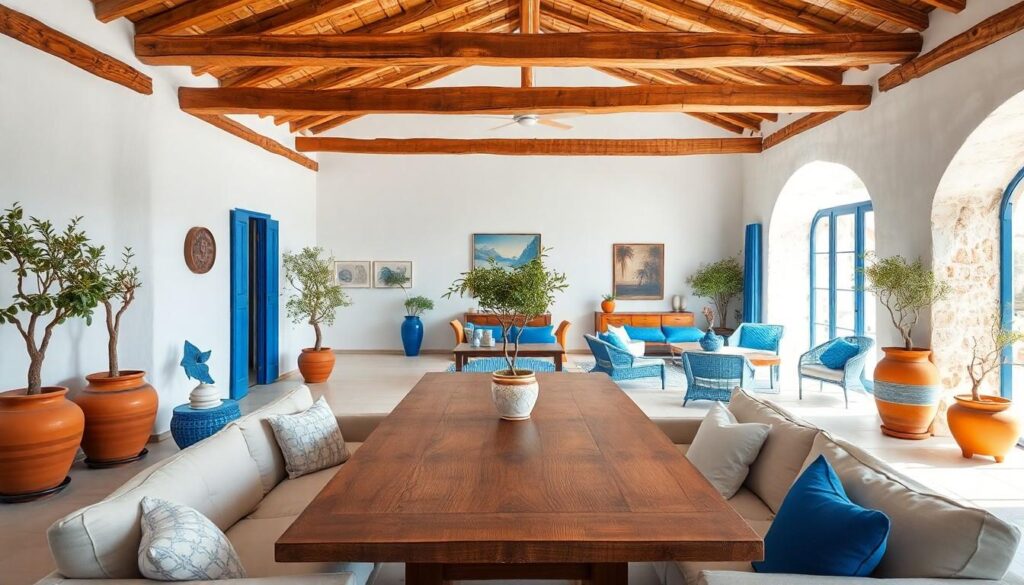
Greek interior design features distinct elements reflecting both aesthetics and functionality. Clean lines and vibrant colors enhance spaces while natural materials create an authentic atmosphere.
Color Palette
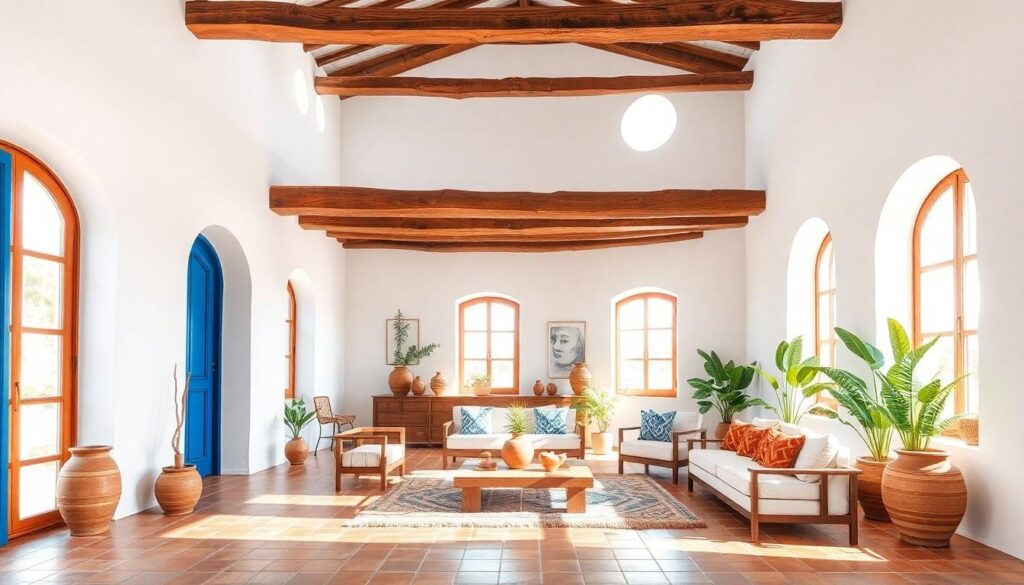
Bright whites dominate to reflect sunlight, complemented by deep blues that mimic the sea. Warm earth tones, such as terracotta and sandy yellows, bring warmth inside. Accent colors often include olive greens and rich reds, representing the region’s landscape. This combination fosters a serene yet lively environment, evoking the beauty of the Greek islands.
Materials And Textures
Natural materials like wood, stone, and clay are predominant in Greek interiors. Sturdy wooden beams often grace ceilings, while stone walls provide a rustic charm. Textured fabrics, including linen and cotton, add softness to seating and drapery. Handcrafted pottery and mosaic tiles enrich surfaces, showcasing artisanship and cultural heritage. This emphasis on materials contributes to a cozy, inviting space.
Furniture And Layout
Furnishings tend to prioritize comfort over formality, featuring low, simple profiles. Wooden dining tables allow for communal meals, fostering social interaction. Seating arrangements encourage open spaces, allowing flow throughout the home. Decorative items, such as accent pillows and natural elements, enhance comfort while maintaining an uncluttered look. This layout reflects the Mediterranean lifestyle, balancing functionality with aesthetic appeal.
Influences Of Greek Culture
Greek culture deeply influences interior design, merging history with contemporary aesthetics. This influence is evident in various aspects of design.
Ancient Greek Architecture
Ancient Greek architecture serves as a foundation for modern Greek interior design. It highlights symmetry, proportion, and the use of columns, which create a sense of grandeur. Structures like temples inspire open layouts, allowing natural light to flow through spaces. The incorporation of elements such as pediments and friezes adds visual interest, while marble accents convey elegance. Artistic details often found in pottery and sculpture enhance surroundings, providing both beauty and function.
Modern Adaptations
Modern adaptations of Greek design reflect contemporary tastes while honoring tradition. Designers integrate minimalist principles alongside vibrant colors, balancing simplicity and liveliness. Furnishings often embrace clean lines, with a focus on comfort and functionality. Use of sustainable materials resonates with current environmental values. Incorporating indoor plants bridges the gap between indoors and outdoors, evoking the enchanting Greek landscape. This fusion of old and new creates inviting spaces that celebrate Greek heritage while appealing to modern sensibilities.
Popular Greek Interior Design Styles
Greek interior design encompasses various styles that reflect the nation’s rich culture and history. Each style possesses unique traits that contribute to the overall aesthetic appeal.
Classical Style
Classical Greek design showcases grandeur, emphasizing symmetry and proportion. Columns, pediments, and friezes feature prominently, echoing the architecture of ancient temples. White marble surfaces dominate interiors, providing a timeless elegance. Decorative elements include intricate pottery and sculptures, adding depth and character. Furnishings lean towards luxurious textiles that exude sophistication. Rich fabrics drape elegantly around living spaces. Natural light floods through tall windows, enhancing the airy feel of each room. The overall ambience radiates tranquility and balance, reminiscent of Greece’s historic splendor.
Contemporary Style
Contemporary Greek interior design melds traditional elements with modern aesthetics. Open floor plans create fluidity, fostering seamless interaction between spaces. Clean lines and minimalistic furniture convey simplicity without sacrificing comfort. Bright whites serve as a canvas, punctuated by vibrant blues or earthy tones that reflect Greece’s coastline. Natural materials such as wood and stone maintain a connection to the landscape while promoting sustainability. Textured fabrics, including linen and cotton, add warmth and comfort. Indoor plants flourish within these spaces, embodying the natural beauty of Greece. This harmonious blend results in inviting environments that celebrate heritage while embracing modern living.
Tips For Incorporating Greek Elements
Incorporating Greek elements into interior design enhances aesthetic appeal. Utilize a bright color palette to mimic the serene coastal vibes of Greece. Whites and deep blues create a calming atmosphere while warm earth tones provide balance.
Opt for natural materials like wood and stone for authenticity. These materials add warmth and character to spaces, contributing to a rustic charm. Choose sturdy wooden beams for ceilings or stone walls to evoke a sense of heritage.
Emphasize comfort through furnishings that invite relaxation. Low-profile couches and communal dining tables encourage gathering and socializing. Textured fabrics, such as linen and cotton, not only soften the overall look but also provide tactile interest.
Select decorative elements that tell a story. Artisan pottery, intricate mosaics, and handmade items reflect Greek craftsmanship and traditions. Incorporate these pieces to create focal points that resonate with the design theme.
Pay attention to lighting, as it plays a crucial role in ambiance. Use wrought iron chandeliers or pendant lamps designed in a classic style for a touch of elegance. Maximizing natural light through large windows further enhances the welcoming atmosphere.
Integrate greenery for a refreshing touch. Indoor plants, reminiscent of the Greek landscape, infuse life and fragrance into spaces. Utilize herb pots or flowering plants to emphasize the connection to nature.
Focus on flow and connectivity in the layout. Open spaces promote interaction, creating a sense of community. Arrange furniture to facilitate movement and conversation, aligning with the Mediterranean lifestyle.
Combining these tips effectively captures the essence of Greek interior design and transforms living spaces into inviting retreats.
Greek interior design offers a captivating blend of history and modernity that transforms living spaces into inviting sanctuaries. Its emphasis on natural materials and vibrant colors creates a warm atmosphere that reflects the beauty of the Mediterranean lifestyle. By incorporating elements of comfort and functionality, this design style encourages social interaction and relaxation.
Adopting Greek design principles allows individuals to infuse their homes with a sense of heritage while embracing contemporary aesthetics. Whether through classical grandeur or modern minimalism, Greek interior design remains a timeless choice that resonates with those seeking elegance and authenticity in their living environments. Embracing these elements can lead to a harmonious balance between beauty and practicality, making any space feel both serene and lively.