Contemporary interior design isn’t just another passing trend, it’s a practical, clean aesthetic that homeowners can carry out right now. Unlike styles tied to specific decades, contemporary design evolves with current preferences while maintaining core principles: clean lines, functional spaces, and a balanced mix of textures and materials. Whether you’re updating a single room or planning a whole-house renovation, understanding contemporary design principles will help you create spaces that feel both current and livable. This guide walks through what defines contemporary style and how to execute it in your own home without needing an interior designer’s budget.
Table of Contents
ToggleKey Takeaways
- Contemporary interior design emphasizes clean lines, functional spaces, and purposeful material choices that adapt to current lifestyles without requiring extensive contractor work.
- Neutral color palettes with one or two bold accent elements, combined with textural material contrasts like matte cabinetry paired with polished stone, create visual interest while maintaining contemporary style’s sophisticated restraint.
- Furniture selection drives contemporary design more than any other decision—prioritize pieces with exposed frames, thin metal or tapered legs, and smooth upholstery over traditional ornate styles.
- Strategic lighting through recessed cans, sculptural pendants, and abundant natural light from large windows with minimal grilles defines contemporary spaces and reinforces their open, uncluttered aesthetic.
- Incorporating negative space and keeping sightlines clear—through floating shelves, wall-mounted TVs, and minimal floor-blocking pieces—is essential to capturing the breathing, forward-looking quality that defines contemporary interiors.
- Contemporary design practical for DIYers because it avoids period-specific details and historical references, making projects like neutral wall painting, minimal baseboards, and flat-panel cabinet updates accessible without professional design budgets.
What Is Contemporary Style Interior Design?
Contemporary style refers to what’s current right now, not to be confused with modern design, which references a specific mid-20th century movement. Contemporary design borrows elements from multiple styles and adapts them to present-day living.
The approach emphasizes function over ornamentation. You won’t find heavy crown molding, elaborate woodwork, or fussy details in contemporary spaces. Instead, the style relies on purposeful furniture, architectural simplicity, and deliberate material choices.
Key characteristics include open floor plans, abundant natural light, and a restrained color scheme. Contemporary homes often feature large windows without heavy treatments, allowing light to define the space. Flooring tends toward wide-plank hardwood, polished concrete, or large-format tile, materials that read as uninterrupted surfaces.
Unlike modern classic interiors that blend vintage and new, contemporary design typically avoids historical references. It’s forward-looking by nature, which means it adapts as materials, technologies, and lifestyles change.
This flexibility makes contemporary style practical for DIYers. You’re not locked into period-specific details or hard-to-source vintage pieces. Projects like painting walls in neutral tones, installing sleek hardware, or replacing traditional baseboards with minimal profiles all push a space toward contemporary without requiring a contractor.
Key Elements That Define Contemporary Interiors
Clean Lines and Minimalist Forms
Clean lines mean exactly that, furniture, cabinetry, and architectural details with simple, geometric profiles. Think flat-panel cabinet doors instead of raised panels, square table legs instead of turned ones, and horizontal railings instead of ornate balusters.
When selecting furniture, look for pieces with exposed legs rather than skirted bases. A sofa with metal or tapered wood legs creates visual space underneath, which reinforces the open, uncluttered feel contemporary design is known for. Avoid anything with excessive tufting, carved details, or curves that read as traditional.
Minimalism doesn’t mean sterile. It means every item earns its place. Built-in storage helps achieve this, consider floor-to-ceiling cabinetry with push-latch doors (no visible hardware) or floating vanities that keep floor space visible.
Carpentry projects like building a simple platform bed frame from 2×6 and 2×8 dimensional lumber, finished with a low-VOC stain or paint, fit the contemporary aesthetic. Skip the decorative headboard: a single upholstered panel or a painted accent wall does the job without adding visual weight.
Architectural elements also matter. Removing door casings and replacing them with square-edge trim, or eliminating baseboards entirely in favor of a recessed reveal detail, sharpens the contemporary look. These aren’t beginner projects, cutting drywall accurately and installing reveals requires precision, but they’re within reach for experienced DIYers with a table saw and steady hand.
Neutral Color Palettes with Bold Accents
Contemporary interiors anchor around neutral base colors: whites, grays, beiges, and blacks. This doesn’t mean boring, it means the architecture and materials get to shine without competing against wall color.
Start with walls in a warm white or soft gray (look for paint with an LRV, Light Reflectance Value, between 50 and 70 for balance). Ceiling white should match or go one shade lighter to maintain cohesion. Avoid stark, cool whites unless you’re working with abundant natural light: they can read as clinical in typical residential lighting.
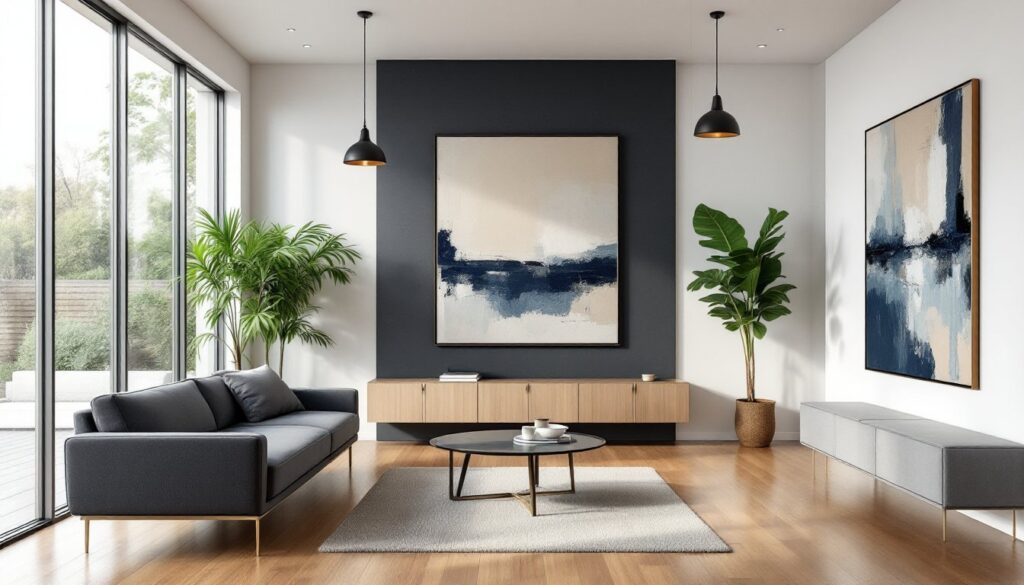
Bold accents come through in controlled doses. A single accent wall in charcoal or deep navy, a piece of statement art, or a vibrant area rug can define a space without overwhelming it. The key is restraint, one or two accent elements per room, not five.
When painting, proper prep is non-negotiable. Fill nail holes with lightweight spackle, sand smooth with 120-grit paper, then prime with a quality PVA primer if working over fresh drywall or a stain-blocking primer over existing paint. Contemporary style shows every surface imperfection, so take the time to get walls smooth before rolling on your finish coat. Two coats minimum, using a 3/8-inch nap roller for smooth walls.
Material contrast adds visual interest within a neutral palette. Pair matte-finish cabinetry with polished stone countertops, or combine brushed metal fixtures with natural wood accents. These textural differences create depth without relying on color. Publications like Design Milk regularly showcase how contemporary spaces layer materials to avoid monotony.
How to Incorporate Contemporary Design in Your Home
Choosing the Right Furniture and Materials
Furniture selection drives the contemporary feel more than any other single decision. Look for pieces with exposed frames, metal accents, and geometric shapes. Upholstery should be smooth, leather, microfiber, or tightly woven fabrics, not brocade or florals.
When shopping, pay attention to leg style. Furniture with thin metal legs, tapered wood legs, or floating bases (wall-mounted pieces) reads as contemporary. Chunky, ornate legs or skirted furniture pulls toward traditional.
Materials should feel current but durable. For flooring, engineered hardwood in wide planks (7 inches or wider) with a matte or low-gloss finish works well. If you’re installing it yourself, choose a click-lock system and remember to leave a 1/2-inch expansion gap at all walls, hardwood moves with humidity changes, and contemporary design’s clean lines make buckling or gaps very obvious.
Polished concrete is another contemporary favorite, though it’s typically a professional install unless you’re comfortable with self-leveling compounds and floor grinders. For a DIY alternative, consider luxury vinyl plank (LVP) in a concrete-look finish. It installs like laminate but offers better durability and moisture resistance. Make sure your subfloor is flat within 3/16 inch over 10 feet, contemporary flooring shows every dip and hump.
Countertops in kitchens and baths should lean toward solid surfaces: quartz composites, polished concrete, or large-format porcelain slabs. These materials offer clean, continuous surfaces without the busy veining of traditional granite. If you’re working with laminate for budget reasons, choose a solid color or subtle pattern and pay close attention to seam placement, contemporary design doesn’t forgive visible seams in high-traffic sight lines.
Cabinetry updates make a huge impact. Flat-panel doors in matte finishes, whether painted or stained, define contemporary kitchens. You can DIY this by either replacing door fronts (if your existing cabinet boxes are in good shape) or refacing with new veneer and doors. Remove all hardware and go with push-latch mechanisms, or use minimal bar pulls in brushed nickel or matte black.
For a deeper jump into fundamental design principles that support these choices, reviewing Interior Design 101 provides a solid foundation.
Lighting and Open Space Considerations
Lighting in contemporary interiors serves both function and form. The style favors recessed can lights, track lighting, and sculptural pendant fixtures with clean geometric shapes. Avoid anything with crystals, fringe, or ornate metalwork.
When installing recessed lighting, plan for even distribution, typically one fixture per 4 to 6 feet of ceiling length in living areas, depending on ceiling height and fixture output. Use LED retrofits with a color temperature between 2700K and 3000K for residential spaces: anything cooler reads as commercial. Dimmer switches are essential, install compatible LED dimmers to avoid flickering.
Pendant lights over islands or dining tables should hang 30 to 36 inches above the surface. Choose fixtures with simple shades, metal, glass, or molded concrete, that make a statement through shape rather than decoration. If you’re replacing an existing fixture, make sure your junction box is rated to support the weight: contemporary pendants in metal or stone can be heavy.
Natural light defines contemporary spaces. If you’re replacing windows, consider larger units with minimal grilles or going grille-free entirely. Casement or picture windows with thin frames maximize glass area. For window treatments, skip heavy drapes in favor of roller shades, panel tracks, or leaving windows bare if privacy allows.
Open space is central to the contemporary aesthetic. This doesn’t necessarily mean knocking down walls (which often requires engineering for load-bearing considerations and permits), but rather keeping sightlines clear. Avoid blocking pathways with furniture, and choose pieces that don’t visually chop up the room.
If you are considering removing a wall, hire a structural engineer first, even non-load-bearing walls may contain plumbing, electrical, or HVAC that complicates removal. Load-bearing walls require a properly sized beam (typically an LVL or steel I-beam) and support posts, which is not a DIY project unless you’re a very experienced builder with permit knowledge.
Floating shelves instead of bulky bookcases, wall-mounted TVs instead of media centers, and console tables instead of heavy sideboards all preserve open space. When building floating shelves, use concealed bracket systems rated for the load you plan to carry, and anchor into studs, drywall anchors won’t cut it for anything beyond lightweight decor.
For those gathering design inspiration, platforms focused on contemporary interiors offer visual examples of how open layouts and strategic lighting work together. You can also review actual project galleries to see material and lighting choices in completed spaces.
Finally, don’t overlook the role of negative space, areas intentionally left empty. Contemporary design breathes. A room doesn’t need to be filled: in fact, a half-empty wall or an unadorned corner often strengthens the overall composition. This restraint is what separates contemporary style from more maximalist approaches seen in other design movements.