Park City, Utah, isn’t just a ski destination, it’s a design laboratory where Rocky Mountain grandeur collides with sleek, modern sensibility. The homes tucked into these alpine slopes reflect a distinctive aesthetic that balances rough-hewn timbers with glass walls, stone fireplaces with minimalist fixtures, and cowhide rugs with sculptural furniture. Whether you’re renovating a mountain cabin or simply want to capture that high-altitude vibe in a suburban split-level, understanding the core principles of Park City interior design helps you avoid the theme-park trap and create spaces that feel both grounded and elevated.
Table of Contents
ToggleKey Takeaways
- Park City interior design balances rustic materials like reclaimed wood and stone with clean, contemporary lines to create mountain modern spaces that feel grounded and elevated.
- Incorporate textural contrast through mixed materials—smooth plaster with barn wood, honed marble with hand-forged hardware—to make interiors feel collected over time rather than catalog-perfect.
- Use neutral wall colors (warm whites or soft grays) paired with nature-inspired accent colors like ochre, rust, and forest green to reflect alpine landscapes without overwhelming the space.
- Exposed structural elements, timber trusses, and stone chimneys define mountain modern architecture; if working with existing homes, consider exposing ceiling joists or adding reclaimed timber beams.
- Practical mountain-home essentials like mudroom storage, durable LVP flooring, heated floors, and thermal-lined drapes ensure livable, functional spaces that handle the high-altitude climate and lifestyle.
- Layer lighting with floor-to-ceiling windows featuring low-E glass (U-factor 0.30 or lower) and warm Edison-bulb LED pendants to protect interiors from UV fade while maintaining welcoming ambiance.
What Defines Park City Interior Design Style
Park City interior design isn’t a single formula, it’s a spectrum that runs from traditional lodge aesthetics to what designers call mountain modern. The common thread? A deep respect for the surrounding landscape and a commitment to materials that can handle the climate.
At its core, this style rejects the overly polished, catalog-perfect look. Instead, it embraces textural contrast: smooth plaster walls against reclaimed barn wood, honed marble countertops paired with hand-forged iron hardware, or a wool Berber rug layered over wide-plank oak flooring. The goal is to make a space feel collected over time, not decorated in a weekend.
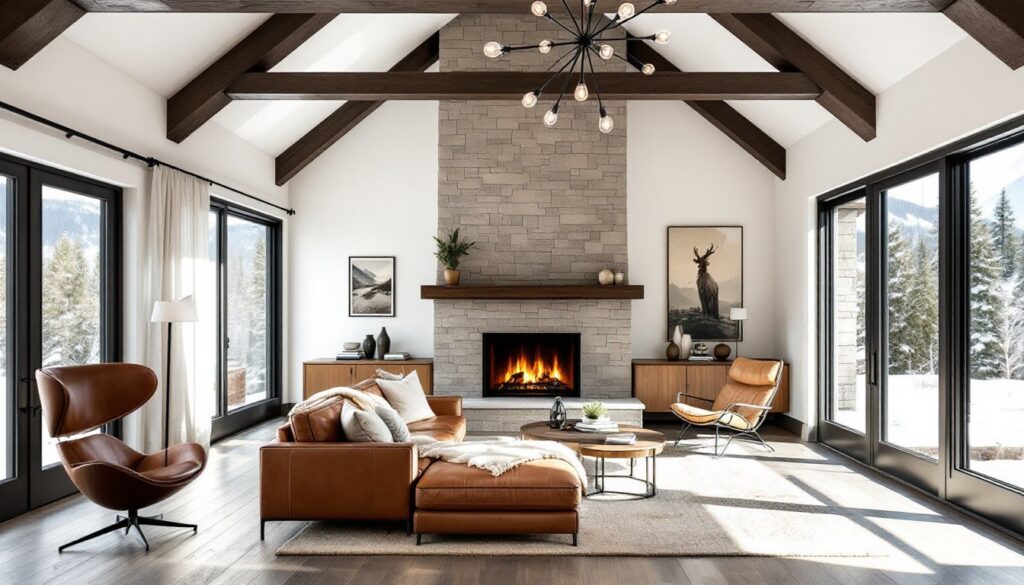
Architecturally, Park City homes often feature exposed structural elements, timber trusses, steel I-beams, or stone chimneys that aren’t hidden behind drywall. If you’re working with an existing home, consider exposing ceiling joists (check if they’re carrying roof load first, consult a structural engineer if uncertain) or adding faux beams made from reclaimed timber. Real reclaimed wood runs $8–$15 per board foot depending on species and condition, but dimensional lumber can be distressed with a wire brush, vinegar/steel wool stain, and a blowtorch for a fraction of the cost.
Lighting plays a tactical role. Large windows, often floor-to-ceiling, are standard, but at 7,000+ feet elevation, UV exposure fades fabrics and finishes quickly. Specify low-E glass (U-factor of 0.30 or lower) during window replacement projects to protect interiors without sacrificing views. For artificial lighting, layer ambient, task, and accent sources. Wrought iron chandeliers and Edison-bulb pendants are common, but LED filament bulbs (2700K color temperature) give the same warm glow without the heat or short lifespan of incandescents.
Essential Elements of Mountain Modern Interiors
Mountain modern interiors strip away the knotty-pine overload of 1980s ski lodges and replace it with cleaner lines, better proportions, and a more restrained material palette. It’s rustic without being cluttered, contemporary without feeling cold.
Natural Materials and Textures
Wood is the backbone, but not just any wood. Reclaimed oak, Douglas fir, and beetle-kill pine appear on accent walls, ceiling planks, and custom furniture. Beetle-kill pine, harvested from trees affected by pine bark beetles, has distinctive blue-gray streaking and is widely available in the Rockies.
For DIY accent walls, use 1×6 or 1×8 tongue-and-groove boards (actual dimensions: 3/4″ x 5.5″ or 7.25″). Run them vertically for height or horizontally for a shiplap effect. Fasten to studs with 18-gauge brad nails and a pneumatic nailer, or use a finish nailer for thicker stock. Leave a 1/8″ gap at floor and ceiling for seasonal expansion, wood movement is real, especially in low-humidity mountain climates.
Stone is the second pillar. Ledgestone, stacked slate, and river rock clad fireplace surrounds and accent walls. Installing natural stone veneer is a manageable DIY project if the substrate is sound. Attach metal lath over moisture barrier, apply a scratch coat of type S mortar, then butter and set stones from the bottom up. Wear leather work gloves and safety glasses, stone edges are sharp and mortar is caustic. A wet tile saw with a diamond blade makes clean cuts: rentals run about $60/day.
Textiles add warmth without visual clutter. Linen, wool, and shearling throws soften leather sofas and live-edge benches. Cowhide rugs are classic, but jute and sisal offer texture underfoot and stand up to tracked-in snow and mud better than plush wool (critical in a real mountain home).
Color Palettes Inspired by Alpine Landscapes
Park City palettes pull directly from the terrain: charcoal granite, weathered barn wood, winter aspen bark, and the deep green of lodgepole pines. The formula is simple, neutral base + natural accents + one or two bolder tones.
Start with walls in warm whites or soft grays: Sherwin-Williams Alabaster (SW 7008), Benjamin Moore Revere Pewter (HC-172), or Farrow & Ball Cornforth White are popular in mountain modern interiors. These shades have enough warmth to avoid the sterile feel of builder-grade white but won’t compete with wood tones.
Accent colors come from nature, ochre, rust, forest green, and slate blue. Use them sparingly: a single accent wall in a den, custom cabinetry in a mudroom, or upholstered dining chairs. Paint coverage averages 350–400 square feet per gallon with quality interior latex: mountain dryness may require a second coat for even color.
Avoid the mistake of over-saturating a space with too much wood. If you have timber ceiling beams, a reclaimed accent wall, and oak floors, balance them with painted drywall, white-washed shiplap, or smooth plaster. The principle of modern classic interiors, mixing textures and finishes, applies here too.
Bringing Park City Style to Your Home
You don’t need a $3 million chalet on the slopes to make this aesthetic work. The key is selectivity, a few well-chosen elements beat a room crammed with antler chandeliers and fur pillows.
Balancing Rustic Charm with Contemporary Comfort
The best Park City interiors don’t pick a lane: they straddle it. A live-edge walnut dining table pairs with powder-coated steel chairs. A river-rock fireplace anchors a room with a floating walnut mantel and recessed LED strip lighting.
If you’re building a mantel, use kiln-dried hardwood (walnut, white oak, or maple) in 2×8 or 2×10 nominal dimensions (actual: 1.5″ x 7.25″ or 9.25″). Cut to length with a miter saw, sand to 220 grit, and finish with hardwax oil or Danish oil for a low-sheen, natural look that won’t yellow like polyurethane. Mount with floating shelf brackets rated for the span and load, a 6-foot mantel in solid walnut can weigh 40+ pounds.
Furniture should mix provenance. A leather Chesterfield sofa or mid-century lounge chair brings formality, while a bench made from reclaimed scaffold planks or a coffee table with hairpin legs keeps things grounded. Platforms like Homedit showcase how designers layer these contrasts without tipping into chaos.
Lighting is where you can introduce sculptural drama. Sputnik chandeliers, geometric pendants, and matte black sconces add a contemporary edge. For a DIY project, consider replacing dated builder fixtures with plug-in pendant kits (no electrical permit required in most jurisdictions if you’re not hard-wiring). Use Edison-style LED bulbs (40–60W equivalent, 2700K) to maintain warmth.
In kitchens, the mountain modern move is mixed materials: a waterfall-edge quartz island (Caesarstone, Cambria, or Silestone in honed or leathered finish) combined with upper cabinets in white oak or walnut. Skip the all-wood kitchen unless you want a 1990s Tahoe timeshare vibe. Instead, pair natural wood lowers with open shelving in matte black steel or leave uppers off entirely to showcase a stone or tile backsplash.
For DIYers tackling a kitchen refresh, painting existing cabinets is the highest-ROI move. Use a bonding primer (Benjamin Moore Advance or Sherwin-Williams Extreme Bond) to ensure adhesion on glossy or previously finished surfaces, then topcoat with a water-based alkyd or catalyzed enamel in semi-gloss. This isn’t a weekend project, proper prep (cleaning, sanding, filling hardware holes) takes as long as painting.
Bathrooms lean spa-like: large-format porcelain tile (12×24″ or larger reduces grout lines), walk-in showers with frameless glass, and freestanding soaking tubs. Heated floors are common in mountain homes: if you’re renovating, electric radiant mat systems (like Schluter DITRA-HEAT or WarmlyYours) install under tile and cost $10–$15 per square foot in materials. You’ll need a dedicated 240V circuit, hire a licensed electrician unless you’re comfortable with NEC Article 424 and local electrical codes.
Finally, don’t forget functional mountain-home details: a mudroom with built-in benches and cubbies for gear, durable LVP or engineered hardwood flooring in high-traffic areas (solid hardwood can cup in fluctuating humidity), and blackout or thermal-lined drapes to manage heat loss through those big windows. These aren’t glamorous, but they’re what separates a pretty design board from a livable home.
Whether you’re drawing inspiration from actual Airbnb designs in the Wasatch Range or adapting concepts from design fundamentals, the principles remain: honest materials, intentional contrasts, and respect for both the landscape and the way people actually live.
Conclusion
Park City interior design succeeds when it feels inevitable, like the space grew out of the mountainside rather than being decorated onto it. Focus on a few quality materials, embrace textural variety, and don’t be afraid to let structural elements show. The aesthetic isn’t about perfection: it’s about authenticity, durability, and a design language that makes sense at altitude.