Designing a showroom isn’t the same as decorating a living room or bedroom. The stakes are higher, your space needs to showcase products, move traffic strategically, and convert browsers into buyers. Whether opening a furniture store, clothing boutique, or home goods shop, the interior design choices directly impact sales. This guide walks through the key differences between showroom and residential design, the must-have elements that drive customer engagement, and how to execute a professional-looking space without blowing the budget.
Table of Contents
ToggleKey Takeaways
- Showroom interior design prioritizes product visibility, brand storytelling, and customer journey—unlike residential spaces that focus on comfort and personal style.
- Strategic lighting with 3,000 to 4,000 lumens per fixture and a color temperature of 3000K to 4000K is essential for accurate color rendering and highlighting product textures.
- Maintain 42 to 48 inches between display fixtures for comfortable customer movement and ADA compliance, with even wider clearance in high-traffic areas near entrances.
- Choose neutral color backdrops (white, soft gray, or warm beige) to let merchandise stand out, and use bold accent walls sparingly to anchor product zones without overwhelming the space.
- Small businesses can achieve professional showroom interior design results by upgrading to LED lighting, using modular shelving, and applying DIY surface improvements like fresh paint and epoxy coatings.
- Showroom design must comply with commercial building codes, including ADA accessibility standards, fire egress requirements, and NEC electrical codes for all lighting and wiring installations.
What Makes Showroom Interior Design Different from Residential Spaces
Residential design prioritizes comfort, personal style, and everyday function. Showroom design, on the other hand, is all about product visibility, brand storytelling, and customer journey. Every square foot needs to work harder.
In a home, a cozy corner can just exist. In a showroom, that corner should either display merchandise, guide foot traffic, or reinforce brand identity. Durability matters more, too, commercial-grade flooring, wall finishes that handle daily wear, and fixtures that won’t wobble after a hundred customers bump into them.
Another key difference: zoning. Residential spaces naturally divide by function (kitchen, bedroom, bath). Showrooms divide by product category, price point, or customer type. High-margin items often get prime real estate near the entrance or at eye level, while clearance or bulk items sit toward the back, a tactic that encourages deeper exploration.
Lighting in showrooms also serves a sales function, not just ambiance. Fixtures need to highlight textures, colors, and details that drive purchasing decisions. Unlike modern classic interior spaces that layer ambient and task lighting for comfort, showrooms use accent lighting to create focal points and guide attention.
Finally, showrooms must comply with commercial building codes, including ADA accessibility standards, fire egress requirements, and often stricter electrical codes (NEC Article 410 for commercial lighting, for instance). If the space involves structural changes or significant electrical work, permits and inspections are non-negotiable.
Essential Elements of Effective Showroom Design
Strategic Lighting to Highlight Your Products
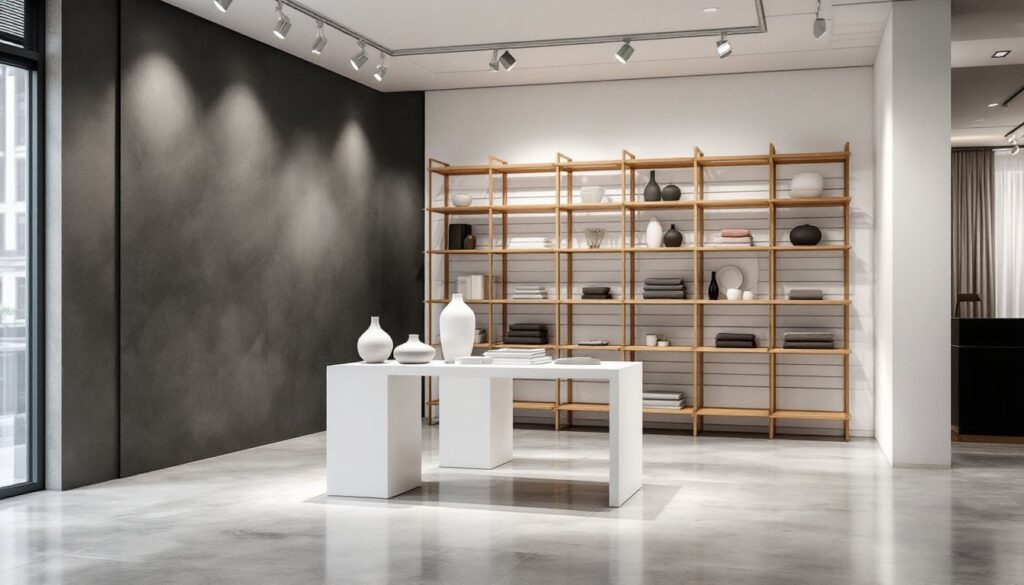
Lighting can make or break a showroom. Track lighting is a go-to for retail because it’s flexible, reposition heads as inventory changes. Aim for 3,000 to 4,000 lumens per fixture in main display areas, with a color temperature of 3000K to 4000K (neutral to cool white) to render colors accurately without harsh shadows.
Accent lighting should hit key products at a 30- to 45-degree angle to bring out texture and depth. LED spotlights work well and run cooler than halogen, reducing heat buildup in enclosed spaces. For apparel or textiles, avoid lighting with a CRI (Color Rendering Index) below 85, anything lower distorts fabric colors, and customers won’t trust what they see.
Don’t overlook ambient lighting. Recessed ceiling fixtures or linear LED strips provide base illumination, preventing the space from feeling too stark or shadowy between displays. Dimmer switches let staff adjust intensity based on time of day or product type.
Safety note: all wiring and fixtures must meet NEC commercial standards, and any ceiling work may require an electrician. If cutting into drywall or running new circuits, check local codes, some jurisdictions require permits for commercial lighting upgrades.
Layout and Flow That Guides Customer Movement
Grid layouts (think big-box stores) maximize display capacity but can feel impersonal. Loop or racetrack layouts guide customers along a defined path, exposing them to more inventory. Free-flow layouts work for boutiques or design-forward brands, creating discovery moments but requiring strong visual merchandising to prevent confusion.
Whatever layout chosen, leave 42 to 48 inches between display fixtures, enough for two customers to pass comfortably, per ADA and fire code minimums. High-traffic areas (entrances, checkout) need even more clearance, closer to 60 inches.
Place anchor displays (bestsellers, seasonal items, or statement pieces) at sight lines from the entrance and at decision points (end caps, corners). These act as visual magnets. Avoid clutter, white space isn’t wasted space. It gives products room to breathe and prevents sensory overload.
Consider sightlines from the street, too. Window displays should pull passersby inside, using layered vignettes (foreground, midground, background) rather than flat arrangements. Elevated platforms or risers (built from 2×4 framing and 3/4-inch plywood, finished with paint or laminate) add dimension without permanent construction.
Choosing the Right Color Palette and Materials
Showroom color schemes should support products, not compete with them. Neutral backdrops, white, soft gray, warm beige, or black, let merchandise pop. Brands targeting luxury often use charcoal or deep navy for drama, while eco-conscious retailers lean toward natural wood tones and off-whites.
Accent walls work, but use them sparingly. A single feature wall in a bold hue (burnt orange, forest green, matte black) can anchor a product zone without overwhelming the space. If painting, choose low-VOC or zero-VOC paints rated for commercial use, they dry faster, resist scuffing, and meet indoor air quality standards. Expect coverage of 350 to 400 square feet per gallon for most interior paints on primed drywall.
For flooring, durability trumps aesthetics. Luxury vinyl plank (LVP) with a 20-mil wear layer handles heavy foot traffic and resists scratches. Polished concrete is trendy, industrial, and nearly indestructible, though it requires proper sealing (epoxy or polyurethane) to prevent staining. If the space has a wood subfloor, check that it’s rated for commercial loads, standard residential 1/2-inch OSB won’t cut it: upgrade to 5/8-inch plywood or thicker.
Wall materials matter, too. Slatwall panels or pegboard provide flexible merchandising options and install over existing drywall with 1×2 furring strips for air gap. For a cleaner look, consider MDF accent panels painted in brand colors, mounted with construction adhesive and finish nails.
Textures add interest without color chaos. Exposed brick (if available), reclaimed wood slats, or even 3D wall panels (often made from PVC or gypsum) create tactile variety. Designers featured on platforms like Elle Decor often layer materials to build depth, pairing smooth surfaces with rough, matte with gloss.
Budget-Friendly Showroom Design Tips for Small Businesses
Professional showroom design doesn’t require a six-figure budget. Start with DIY surface prep: patch nail holes with spackle, sand rough spots, and apply a fresh coat of paint. A gallon of quality wall paint runs $30 to $60, and most small showrooms (under 1,500 square feet) can be refreshed with five gallons or less.
Modular shelving systems (wire or wood) cost a fraction of custom cabinetry. Look for commercial-grade units rated for 200 to 300 pounds per shelf, they’re adjustable as inventory changes. Freestanding units also avoid permanent alterations, which matters if leasing.
Lighting upgrades deliver huge ROI. Swapping out old fluorescent tubes for LED shop lights (around $25 to $50 per 4-foot fixture) cuts energy costs and improves color rendering. Track lighting kits start around $100 for a 6-foot run with three adjustable heads, enough to accent a feature wall or display table.
For flooring, if the existing surface is sound, clean it thoroughly and apply a concrete stain or epoxy coating (DIY kits run $200 to $400 for a 500-square-foot space). If covering old tile or worn carpet, click-lock LVP installs without glue or nails, expect $2 to $4 per square foot for mid-grade planks.
Repurpose materials when possible. Wooden pallets (often free from shipping docks) become rustic display platforms or vertical garden walls. 2x4s and plywood build custom shelving or product pedestals for under $50 in materials. Paint or stain them to match the brand palette.
Similar to tactics used in rental-focused design, small changes like updated hardware, cohesive signage, and strategic accent pieces make disproportionate impacts. Homedit for budget-friendly display ideas and furniture hacks that translate well to retail.
Skip expensive consultants initially, many interior design fundamentals apply to commercial spaces. Study competitor showrooms, sketch floor plans on graph paper, and test layouts with cardboard mockups before committing to fixtures.
Conclusion
Showroom design blends aesthetics with sales strategy. Prioritize lighting that showcases products, layouts that guide traffic naturally, and finishes durable enough for daily commercial use. Small businesses can achieve professional results through smart material choices, DIY surface work, and modular fixtures. Whether working with a tight budget or larger scope, the principles remain: make every element serve the brand and the customer journey.