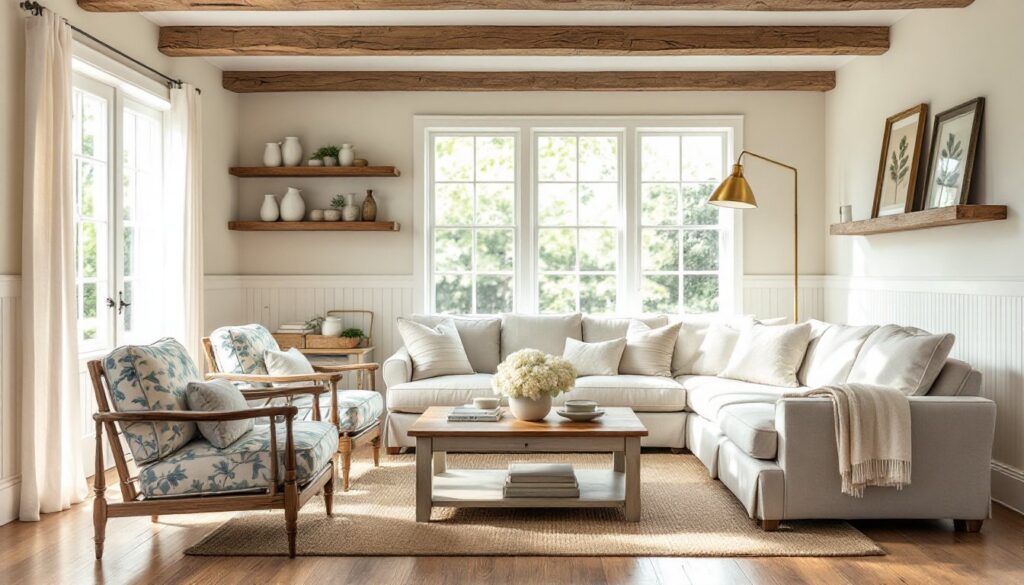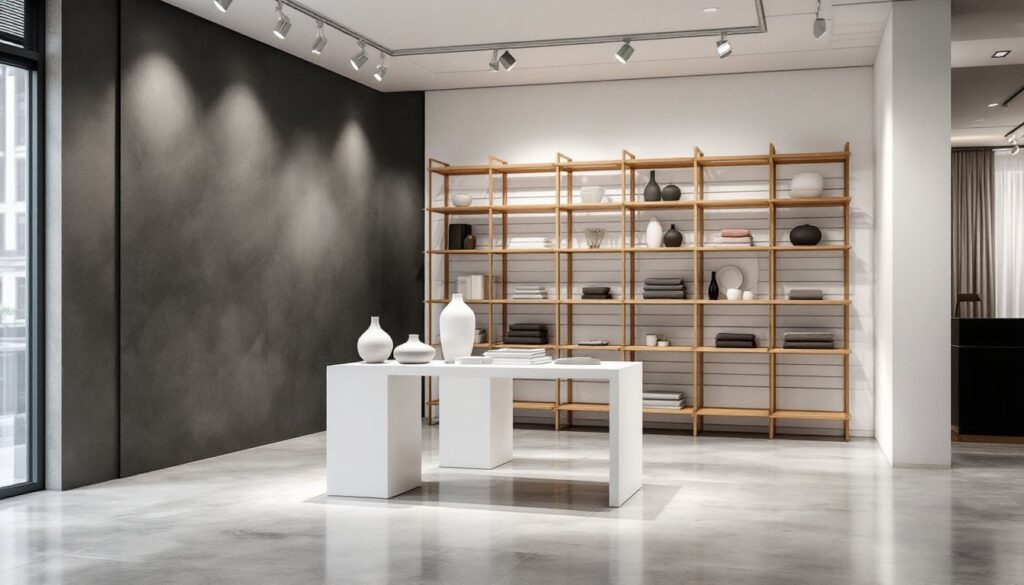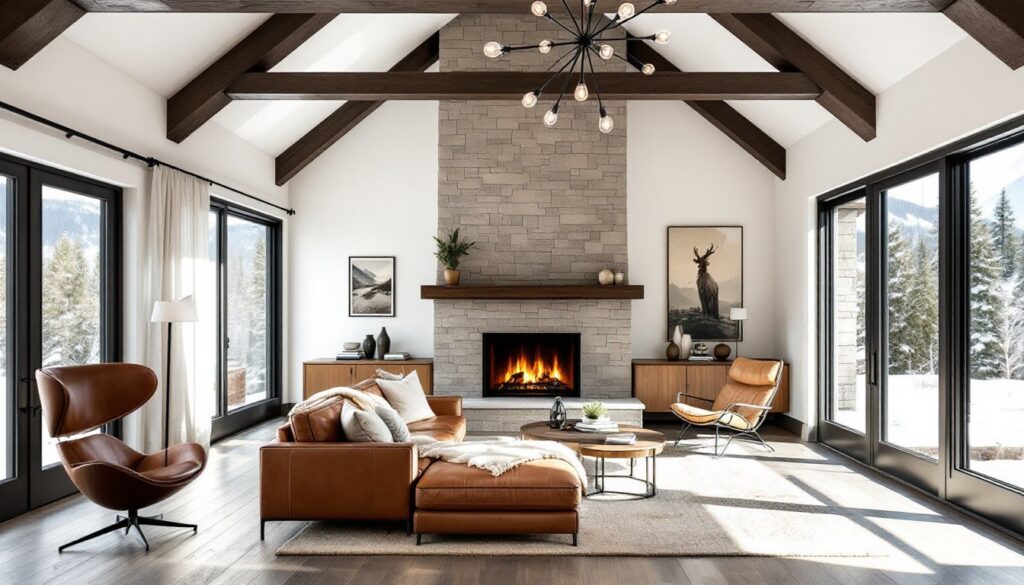

Most homeowners freeze when staring at a paint chip wall. Too many colors, too many opinions, and one wrong move turns a living room into a circus tent. But there’s a color strategy that delivers visual interest without the guesswork: split complementary design. It’s not a Pinterest trend or designer secret, it’s a proven color relationship that creates balance, depth, and personality in any space. Unlike rigid monochrome schemes or chaotic rainbow walls, split complementary gives rooms a coordinated look that feels intentional, not accidental. Here’s how it works and why it’s one of the most practical tools in interior design.
Table of Contents
ToggleKey Takeaways
- Split complementary interior design uses a dominant base color plus two accent colors adjacent to its complement, creating visual interest without harsh clashing.
- Apply the 60-30-10 ratio: base color on 60% of the room, one accent at 30%, and the secondary accent at 10% to maintain balance and prevent color overload.
- Test paint swatches in actual lighting conditions for several days—colors shift dramatically under natural light, warm LED bulbs (2700K), and cool daylight (5000K+).
- Split complementary works in living rooms and bedrooms with muted base colors and textile accents, but requires adaptation in kitchens and bathrooms where cabinetry and tile limit flexibility.
- Avoid common mistakes like using all three colors at full saturation, ignoring undertones in trim and ceilings, and skipping the color wheel when selecting accent pairs.
What Is Split Complementary Color Scheme in Interior Design?
A split complementary color scheme uses three colors: one base color and the two colors adjacent to its direct complement on the color wheel. Instead of pairing blue with orange (its complement), a split complementary scheme pairs blue with yellow-orange and red-orange.
This setup softens the high contrast of true complementary colors while keeping visual tension alive. The result is a palette that feels dynamic without clashing. It’s particularly useful in spaces where a homeowner wants color without committing to bold, head-on contrast.
Here’s the structure:
- Base color: The dominant hue (e.g., blue-green)
- Accent 1: One neighbor of the complement (e.g., red)
- Accent 2: The other neighbor (e.g., orange)
The base color typically covers 60–70% of the room, walls, large furniture, or flooring. The two accent colors appear in smaller doses: throw pillows, artwork, trim, or textiles. This 60-30-10 ratio isn’t a hard rule, but it prevents any single color from overpowering the space.
Unlike analogous schemes (which use neighboring colors and can feel flat), split complementary maintains contrast. And unlike triadic schemes (three evenly spaced colors), it’s easier to control because the accents are closely related.
Why Split Complementary Works Better Than Traditional Color Rules
Most traditional color advice boils down to “play it safe” or “hire a designer.” Split complementary sits in the middle. It gives enough contrast to make a room interesting but enough harmony to avoid looking like a preschool classroom.
Complementary schemes (direct opposites like red and green) create strong visual impact, but they’re hard to live with. Too much saturation and the eye doesn’t know where to rest. Split complementary dials that back by replacing one intense hue with two softer, related tones.
Monochromatic schemes are foolproof but often lack energy. A room painted in five shades of gray might photograph well, but it can feel sterile in person. Split complementary adds warmth or coolness in controlled doses, which helps a space feel lived-in.
Analogous schemes (e.g., blue, blue-green, green) are cohesive but can lack focal points. Without contrast, the eye has nothing to latch onto. Split complementary solves this by introducing accent colors that create visual stops, places where the eye pauses and resets.
This scheme also adapts to different design styles more easily than rigid palettes. A blue-green base with coral and peach accents works in coastal settings. Swap the base to deep teal with rust and gold accents, and it fits mid-century or bohemian interiors. The structure stays the same: the mood shifts with saturation and material choices.
How to Choose Your Split Complementary Palette
Start with the base color. This is the hue that will dominate the room, so choose something the homeowner can tolerate on four walls or a large sofa. Neutrals don’t count here, gray, beige, and white are supports, not players in the scheme.
Once the base is set, locate its complement on a standard 12-color wheel. Don’t guess. Use a physical wheel or a digital tool. The complement sits directly across from the base. For example:
- Base: Blue → Complement: Orange
- Base: Red-violet → Complement: Yellow-green
- Base: Yellow → Complement: Violet
Now skip the complement and choose the two colors on either side of it. These are the accent colors. If the base is blue, the complement is orange. The two neighbors are yellow-orange and red-orange. Those become the accents.
Next, adjust saturation and value. A pure, bright base with two equally bright accents will overwhelm most rooms. Instead, vary the intensity:
- Use a muted or tinted base (e.g., sage green instead of electric green)
- Keep one accent bold and the other subdued (e.g., burnt orange and soft peach)
Test swatches in the actual room. Paint a 2-foot by 2-foot section on the wall and live with it for a few days. Check it in morning light, midday sun, and evening lamplight. Colors shift dramatically depending on natural light exposure and bulb temperature (measured in Kelvin, aim for 2700K–3000K for warm light, 4000K+ for cool).
Consider existing finishes. If the room has oak trim (warm undertone), a cool base like blue-green works, but the accents should lean warm to tie into the wood. If the flooring is gray luxury vinyl plank (cool undertone), balance it with a warmer base or use one warm accent to offset the chill.
Paint isn’t permanent, but it’s also not free. A gallon of quality interior paint covers roughly 350–400 square feet with one coat. Most rooms need two coats. Budget accordingly and buy sample pots before committing to five-gallon buckets.
Applying Split Complementary Colors in Different Rooms
Living Rooms and Bedrooms
Living rooms handle split complementary schemes well because they have multiple surfaces to work with: walls, furniture, textiles, and accessories. Start with a neutral or muted base on the walls, think soft teal, dusty violet, or muted gold. This prevents the room from feeling too loud for extended hangouts.
Use accent colors in upholstery and textiles. If the walls are a soft blue-green, bring in coral throw pillows and a rust-colored area rug (the two neighbors of the complement, red-orange). A single accent wall can work, but it’s riskier. Paint one wall in a bolder version of the base, not in an accent color, which can fragment the space.
In bedrooms, keep the base calm. A room where someone sleeps shouldn’t hit them with high-contrast color every morning. A muted lavender base with soft peach and coral accents (neighbors of yellow-orange) creates warmth without overstimulation. Bedding, curtains, and artwork carry the accents. Swap them seasonally if the homeowner wants variety without repainting.
Lighting matters. Warm LED bulbs (2700K) make cool bases (blue, green, violet) feel less sterile. Cool daylight bulbs (5000K+) can make warm bases (red, orange, yellow) feel harsh. Match bulb temperature to the dominant color family.
Kitchens and Bathrooms
Kitchens and bathrooms are trickier because they’re material-heavy. Countertops, tile, cabinetry, and fixtures don’t change easily, so the split complementary palette has to fit around them.
If the kitchen has white or light gray cabinets, the walls can carry the base color. A soft sage green base with terracotta and warm clay accents works if the countertop is neutral (quartz, butcher block, or light granite). Bring the accents in through backsplash tile, cabinet hardware, bar stools, or small appliances.
Avoid painting base colors in high-moisture bathrooms unless the paint is mildew-resistant (look for formulas with antimicrobial additives). Instead, use the split complementary scheme in tile, towels, and accessories. A blue-tiled shower with yellow-orange and red-orange accents in the floor tile or vanity hardware keeps the scheme intact without risking paint failure.
Kitchens and bathrooms also need cleanability. Use satin or semi-gloss paint finishes on walls (easier to wipe down than flat). For tile, epoxy grout resists staining better than standard cement grout and holds color longer.
In smaller bathrooms, limit the base to one accent wall or tile feature. A 5×8-foot bathroom wrapped in a bold base color can feel claustrophobic. Use the base sparingly and let the accents pop in towels, rugs, or a painted vanity.
Common Mistakes to Avoid with Split Complementary Design
Using all three colors at full saturation. A pure yellow base with pure blue-violet and pure red-violet accents will look like a carnival. Tone down at least two of the three. Mute the base, keep one accent bold, and soften the other.
Ignoring undertones. Paint labeled “blue” might lean green, gray, or purple depending on the brand. Those undertones clash if they don’t align with the chosen accents. Always test swatches side by side before buying full gallons.
Forgetting about trim and ceilings. Most DIYers default to white trim, but white has dozens of variations, some warm, some cool, some stark. A cool white trim against a warm yellow base creates visual friction. Match the trim’s undertone to the base, or use a neutral that bridges both temperatures. Ceilings don’t have to be white, either. A ceiling painted in a 10–20% lighter tint of the base color can make the room feel taller without the harshness of stark white.
Overloading one accent. If one of the two accents dominates, the scheme tips into a different category (analogous or complementary). Keep the 60-30-10 ratio in mind: 60% base, 30% dominant accent, 10% secondary accent. This maintains balance and prevents one color from hijacking the room.
Skipping the color wheel. Guessing at split complementary pairs usually fails. A physical color wheel costs under $10 and removes the guesswork. Digital tools work too, but they depend on screen calibration, which varies. When in doubt, go analog.
Not accounting for finish sheen. A matte base color looks different than the same color in satin or gloss. Sheen affects how light reflects, which changes perceived color intensity. Use flat or matte finishes for ceilings and low-traffic walls, eggshell or satin for living spaces, and semi-gloss for trim and high-contact areas.
Ignoring the room’s natural light. North-facing rooms get cool, indirect light, which can make cool bases feel icy. South-facing rooms get warm, direct light, which can make warm bases feel overwhelming. Test paint samples on different walls at different times of day before committing.
Forgetting about modern classic interior design principles that emphasize balance and proportion. Split complementary works best when it respects the room’s architecture and function. A bold scheme in a room with heavy crown molding and wainscoting can compete with the details instead of complementing them.
Not planning for future changes. Paint is semi-permanent, but furniture and textiles aren’t. If the homeowner plans to replace a sofa or rug in the next year, choose a base that works with multiple accent pairings. Neutral bases (greige, soft taupe, warm white) allow more flexibility if the split complementary accents need to shift.
Treating every room the same. A split complementary scheme that works in a living room might not translate to a bedroom or kitchen. Adjust saturation, ratio, and application method based on the room’s size, function, and natural light. There’s no one-size-fits-all formula, just a structure to adapt.
For more foundational guidance before diving into color, reviewing interior design 101 principles helps ensure the split complementary scheme fits into a cohesive design plan rather than feeling tacked on.
Understanding split complementary color theory and seeing it applied in different contexts can also clarify how the scheme adapts to various styles and spaces. Different design trends show how split complementary palettes evolve with shifting tastes, but the core structure remains reliable.
Split complementary interior design isn’t a magic fix, but it’s a practical framework. It gives homeowners a way to use color confidently without needing a design degree or a consultant. Done right, it turns a room from forgettable to finished, without the guesswork or the circus tent.