Cottage interior design has evolved from quaint countryside retreats into a full-fledged design movement that works in urban apartments, suburban homes, and rural properties alike. The style combines comfort, authenticity, and a relaxed approach to decorating that prioritizes lived-in charm over pristine showroom aesthetics. Unlike formal design schemes that demand precision and matching sets, cottage style welcomes mismatched furniture, personal collections, and imperfect finishes that tell a story. Whether renovating a fixer-upper or refreshing a single room, understanding the foundational principles of cottage design helps homeowners create spaces that feel genuinely welcoming without resorting to formulaic decor templates.
Table of Contents
ToggleKey Takeaways
- Cottage interior design embraces comfort, authenticity, and layered decor over perfection, making it forgiving for DIYers and ideal for creating genuinely welcoming spaces.
- Natural materials like reclaimed wood, linen, and beadboard paneling form the foundation of cottage interior design and add authentic character to any room.
- Color schemes should draw from nature using soft, weathered tones like creams, dusty blues, sage greens, and buttery yellows at reduced saturation rather than saturated hues.
- Furniture success in cottage style comes from mixing vintage finds with newer pieces, avoiding matching sets, and prioritizing comfort through slipcovered upholstery and well-proportioned layouts.
- Layered lighting with table lamps, floor lamps, and sconces at 2700K color temperature, combined with textiles and botanical elements, ties cottage spaces together and prevents stark, sterile interiors.
- Room-by-room application remains consistent: open shelving in kitchens, window seats and flexible seating in living rooms, textured bedding in bedrooms, and moisture-resistant beadboard in bathrooms create cohesive cottage environments.
What Defines Cottage Interior Design?
Cottage interior design centers on creating inviting, unpretentious spaces that prioritize comfort and personal character over formal design rules. The style originated in European rural homes where functionality, resourcefulness, and available materials shaped interior choices, think exposed beams, plaster walls, and furniture built from local wood species.
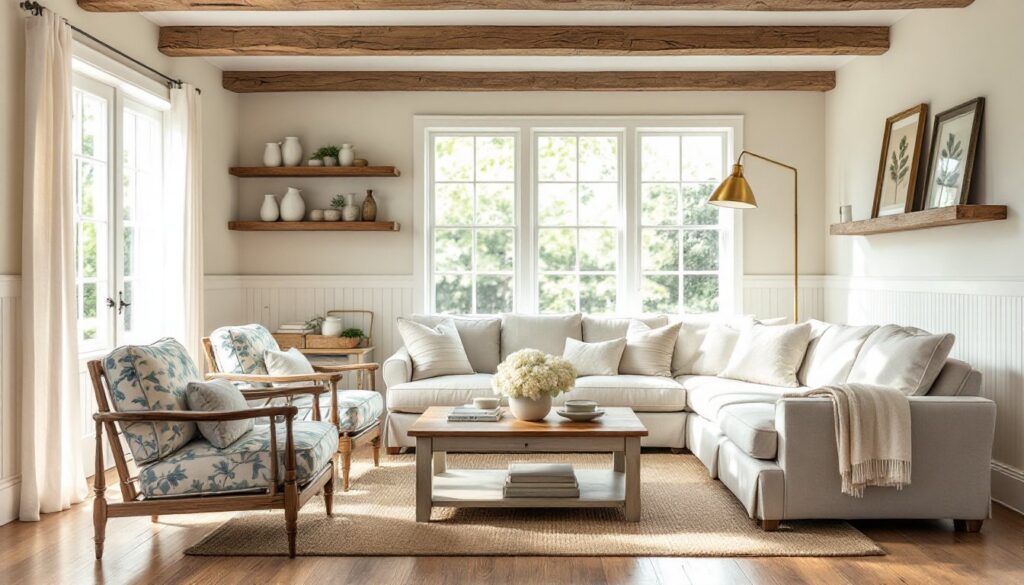
Today’s cottage interiors retain that practical foundation but adapt it to modern living. Key characteristics include natural materials like reclaimed wood, linen, and cotton: architectural details such as beadboard paneling (typically ¼-inch or ⅜-inch thickness), shiplap, and exposed ceiling joists: and furnishings that mix vintage finds with newer pieces. Unlike minimalist styles that strip rooms to essentials, cottage style interior design embraces layering, stacked books, displayed collections, textile mixing, that adds visual warmth.
The defining trait is a lack of rigidity. Paint finishes can show brushstrokes, wood floors display wear patterns, and furniture doesn’t need to match. This approach works well for DIYers because it forgives minor imperfections that might stand out in sleeker design schemes. A slightly uneven coat of milk paint on a refinished dresser or misaligned tongue-and-groove paneling reads as authentic character rather than poor execution.
Essential Elements of Cottage Style
Several foundational elements appear consistently across successful cottage interiors, regardless of regional variations or personal taste.
Natural materials form the backbone. Hardwood flooring (oak, pine, or reclaimed barn wood) typically features widths of 3-5 inches, though reclaimed boards sometimes run wider. For walls, beadboard wainscoting installed to 32-36 inches works in kitchens, bathrooms, and dining areas, use construction adhesive and 18-gauge brad nails every 12 inches into wall studs for secure attachment. Wood ceiling beams, whether structural or decorative faux beams (hollow boxes made from 1×6 or 1×8 boards), add architectural weight to living spaces and bedrooms.
Textiles provide softness and pattern. Linen curtains, cotton slipcovers, wool throws, and quilts introduce texture without formal drapery treatments. Natural fibers wear better than synthetics and develop appealing patina over time. For upholstery projects, medium-weight linen (7-9 oz per square yard) works for chair seats and cushions: lighter weights suit curtains.
Open shelving in kitchens and dining areas displays everyday dishes, glassware, and cookware. Install floating shelves using heavy-duty brackets rated for at least 50 lbs per pair, screwed into studs with 3-inch wood screws. Standard shelf depth runs 10-12 inches for dishes: use 1×12 or 2×12 lumber (actual dimensions 11¼” and 11¼” respectively).
Vintage and antique pieces anchor rooms with history. Flea market finds, inherited furniture, and architectural salvage (old doors repurposed as headboards, window frames as mirrors) add character without requiring perfect condition. Airbnb hosts often use this mixing strategy to create memorable, photogenic spaces that feel curated rather than cookie-cutter.
Color Palettes That Bring Cottage Charm to Life
Cottage color schemes draw heavily from nature, favoring soft, weathered tones over saturated hues. White and cream form the foundation, Benjamin Moore’s Simply White and Farrow & Ball’s Pointing are popular choices for trim and walls. These shades reflect light in smaller rooms and provide clean backdrops for layered decor.
Accent colors include soft blues (powder, duck egg, faded denim), sage and moss greens, blush pinks, and buttery yellows. These work best at 50-75% saturation compared to their pure forms, think robins-egg blue rather than electric turquoise. For exterior-grade durability on interior trim or furniture, use acrylic latex paint with a satin or eggshell finish: one gallon covers approximately 400 square feet.
Many cottage interiors employ a monochromatic base with pops of color through accessories rather than painted walls. This approach offers flexibility, swapping throw pillows and seasonal textiles refreshes a room without repainting. When painting wood furniture, light sanding (120-grit followed by 220-grit) and a bonding primer ensure paint adhesion: two thin coats beat one thick application for smooth, durable finishes.
Neutral palettes also incorporate warm wood tones rather than hiding them. Natural pine, oak, or cedar ceilings and floors add golden or honey notes that prevent all-white schemes from feeling sterile. If existing wood trim is orange-toned oak from the 1980s and doesn’t fit the aesthetic, a coat of white or light gray paint transforms it without removal, just clean with TSP substitute, prime with shellac-based primer, and apply two coats of acrylic latex.
Furniture and Layout Tips for Cottage Interiors
Cottage furniture prioritizes comfort, scale, and a collected-over-time appearance. Avoid matching bedroom sets or living room suites, mixing wood finishes, styles, and eras creates the layered look central to the aesthetic.
Seating should be plush and inviting. Sofas and chairs with slipcovers in washable cotton or linen work well, especially in homes with kids or pets. Slipcovered furniture also allows seasonal changes, lighter fabrics in summer, heavier textures in winter. For DIY slipcovers, prewash fabric to account for shrinkage (cotton can shrink 3-5% on first wash) and use French seams for durability.
Tables often feature painted or distressed finishes rather than high-gloss stains. A farmhouse table built from 2×6 or 2×8 planks (actual dimensions 1½” × 5½” or 1½” × 7¼”) provides sturdy dining space: plans are widely available for intermediate-level woodworkers. Attach the tabletop to the apron using figure-8 fasteners or wooden cleats rather than direct screws to allow for wood movement across seasonal humidity changes, critical for preventing cracks.
Storage furniture like dressers, cupboards, and hutches should be proportional to room size. In smaller cottages (under 1,200 square feet), oversized armoires overwhelm spaces. Measure doorways before buying vintage pieces, a beautiful hutch is useless if it won’t fit through a 30-inch doorway. Standard modern doors run 32-36 inches, but older homes may have narrower openings.
Layout should encourage conversation and flow. Anchor seating around focal points (fireplace, window with a view) rather than pushing everything against walls. In living rooms under 200 square feet, a loveseat plus two chairs often works better than a full-size sectional. Leave 24-36 inches of walkway space around furniture for comfortable movement. Those tackling broader design fundamentals will recognize these spacing guidelines as universal principles adapted to cottage proportions.
Cottage-Inspired Decor and Accessories
Accessories bring personality to cottage interiors, but restraint prevents clutter. Focus on items with function, sentimental value, or genuine aesthetic appeal rather than filling every surface.
Textiles add warmth and pattern. Layer quilts and throws on beds and sofas, vintage quilts show wear gracefully and often cost less than new ones at estate sales. Cotton or linen throw pillows in florals, checks, or stripes mix well: aim for odd numbers (three or five) per seating area. For curtains, simple rod-pocket panels or tab-top styles suit cottage windows better than formal pleated drapery. Hang curtain rods 4-6 inches above window frames and extend them 3-4 inches beyond each side for proper proportion.
Collections displayed on open shelving or mantels personalize spaces. Grouped items (white ironstone, vintage bottles, transferware) create visual impact: scattered individual pieces look disorganized. Use odd-numbered groupings (three, five, seven) and vary heights.
Lighting should be layered and warm-toned. Avoid overhead-only lighting, add table lamps, floor lamps, and sconces at multiple heights. LED bulbs in 2700K color temperature mimic incandescent warmth: choose 800-1100 lumens (60-75W incandescent equivalent) for reading lamps. Antique fixtures often require rewiring, if you’re not comfortable working with household wiring (120V), hire a licensed electrician. Most jurisdictions require permits for adding new circuits or junction boxes.
Botanical elements tie interiors to nature. Fresh flowers, potted herbs in kitchen windows, and dried hydrangeas add life without permanent commitment. Simple ceramic or enamelware containers work better than elaborate vases. Recent trends documented by Country Living show renewed interest in bringing outdoor elements inside through natural materials and plant life.
Room-by-Room Cottage Design Ideas
Applying cottage principles varies by room function, but the core approach remains consistent: comfort, natural materials, and personal character.
Living Rooms and Common Spaces
Living rooms benefit from flexible furniture arrangements that support multiple activities, reading, conversation, watching TV. A sofa perpendicular to a fireplace with two chairs opposite creates intimacy: add a coffee table or ottoman (which doubles as seating and footrest) in the center. Use area rugs to define zones in open-plan spaces, jute, sisal, or flat-weave cotton rugs in 5×7 or 8×10 sizes suit most cottage living rooms. Rugs should extend at least 6 inches beyond furniture footprints on all sides.
Built-in seating like window seats adds charm and function. A basic window seat requires a ¾-inch plywood base supported by 2×4 framing, cushion foam (4-inch high-density foam works for seating), and a fabric cover. This project suits intermediate DIYers with basic carpentry skills. Underneath storage uses simple piano hinges for lift-up lids or open cubbies.
Kitchens embrace open shelving, farmhouse sinks (typically 30-36 inch apron-front models in fireclay or cast iron), and freestanding furniture like hutches or islands. Painted cabinets in soft whites, grays, or blues replace dark wood stains. When painting existing cabinets, proper prep is critical, clean with TSP, sand with 120-grit, prime with bonding primer, then apply two coats of cabinet-grade paint (alkyd or acrylic enamel). Skip the deglosser products: they don’t substitute for actual sanding. For farmhouse sink installation in existing countertops, you’ll need to modify cabinet framing and potentially the countertop opening, this often requires a professional unless you’re experienced with cabinetry.
Bedrooms layer textiles for cozy, collected aesthetics. Start with neutral bedding, then add quilts, coverlets, and decorative pillows. Shams in standard (20×26 inches), queen (20×30 inches), or king (20×36 inches) sizes layer behind sleeping pillows. Bedside tables don’t need to match, mix a vintage nightstand on one side with a small painted table on the other. Wall treatments like board-and-batten or beadboard wainscoting add architectural interest: install boards vertically with 1×4 or 1×6 boards spaced 12-18 inches apart, then cap with a horizontal rail.
Bathrooms often feature pedestal sinks, clawfoot tubs, and beadboard wainscoting. Vintage fixtures require attention to plumbing compatibility, old tubs may need new drain assemblies, and faucets must match hole configurations (4-inch spread vs. 8-inch spread on sinks). For beadboard in bathrooms, use MDF beadboard primed for moisture resistance or PVC beadboard in shower surrounds: both resist humidity better than solid wood. Install with construction adhesive and brad nails, then caulk seams with paintable latex caulk.
Those exploring historical design approaches might draw parallels with Tudor interiors, which similarly emphasize exposed wood and handcrafted details, though with more formal proportions. The cottage approach softens those traditional elements into relaxed, everyday living spaces.