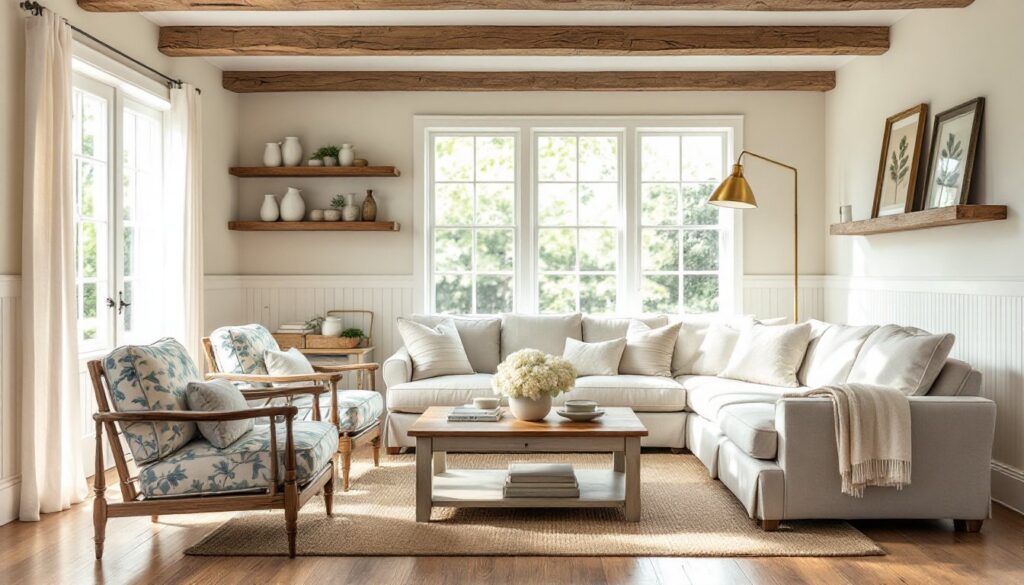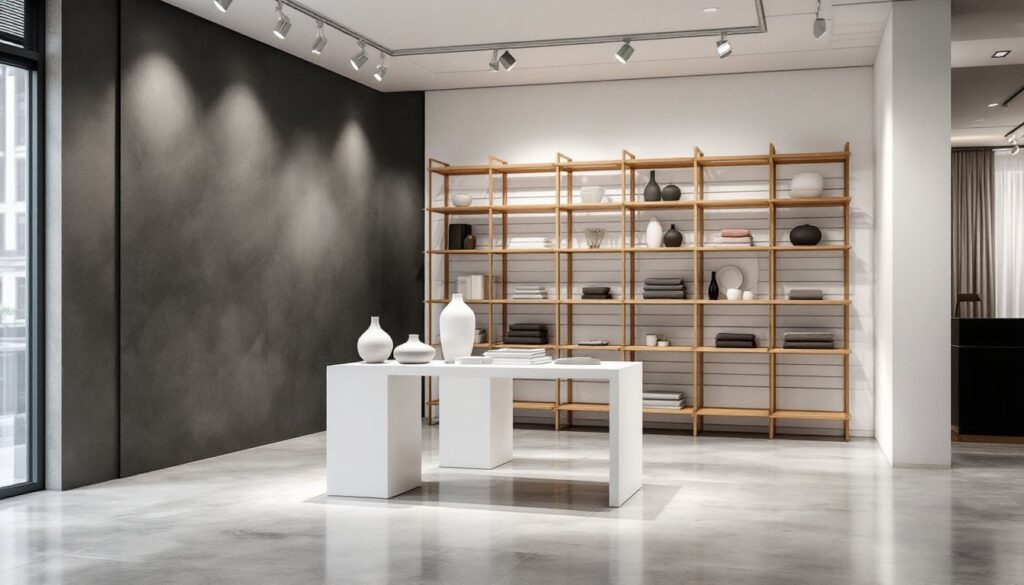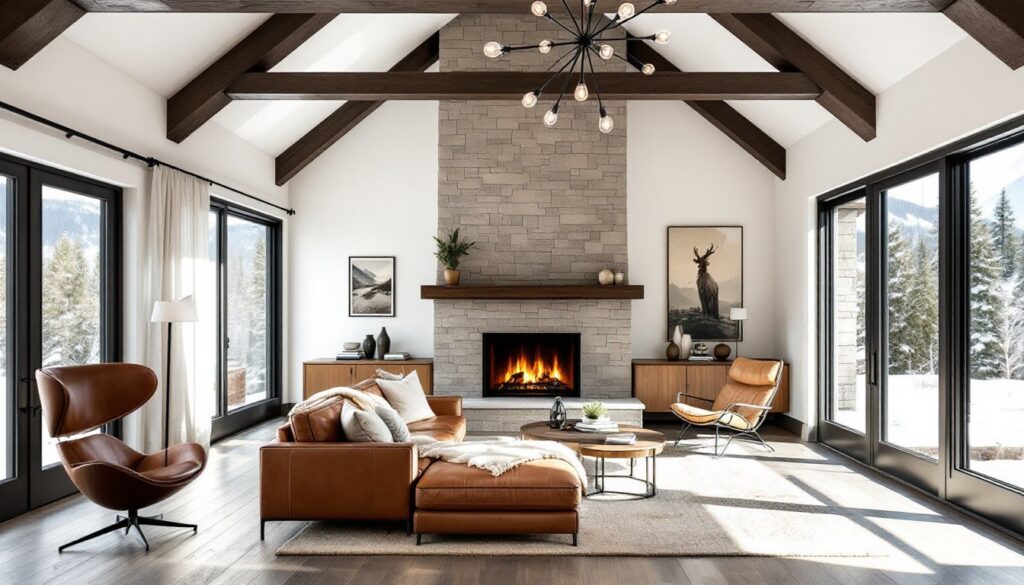
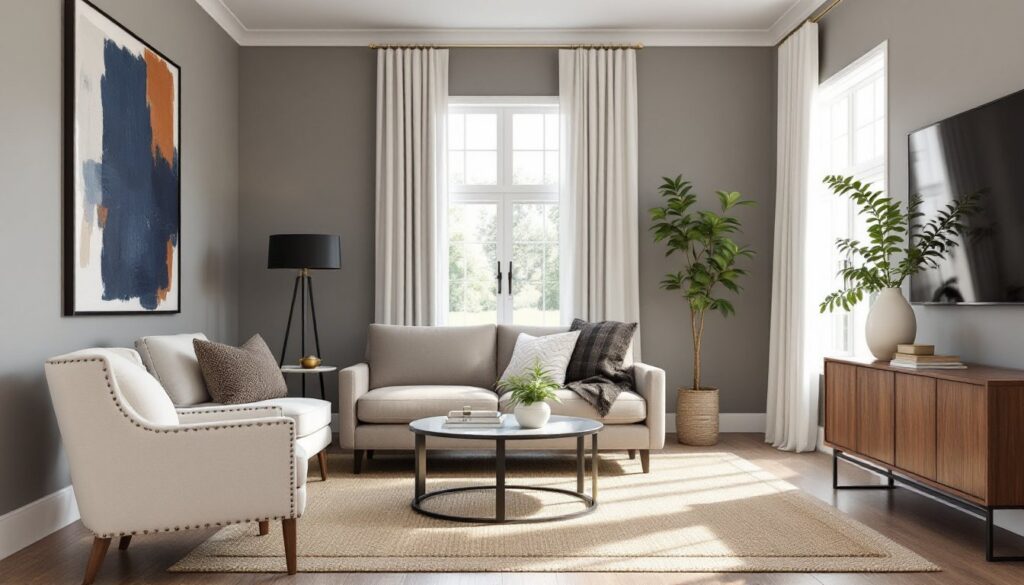
Transitional modern design sits in that sweet spot where classic comfort meets clean-lined contemporary style. It’s the design approach that lets you keep your grandmother’s wingback chair while adding a sleek glass coffee table, and making both pieces look like they belong. This style isn’t about picking a lane: it’s about blending the best of traditional warmth with modern simplicity to create spaces that feel both current and enduring. Unlike purely modern spaces that can feel cold or traditional rooms that might seem dated, transitional modern design offers flexibility and longevity that works across different homes and lifestyles.
Table of Contents
ToggleKey Takeaways
- Transitional modern interior design blends traditional comfort with contemporary clean lines, creating spaces that are both timeless and practical for real living.
- Use a cohesive neutral color palette with warm undertones (soft whites, taupes, creams) and layer at least three different textures per room to maintain visual interest without overwhelming the space.
- Mix furniture styles intentionally—pair traditional elements like turned legs with modern upholstery, and combine natural materials (wood, stone) with polished metals and glass for balance.
- Create layered lighting with ambient, task, and accent fixtures using simple, sculptural designs rather than ornate chandeliers or industrial cages to avoid dating your space.
- Avoid over-accessorizing and matchy-matchy furniture sets; instead, edit ruthlessly, mix wood tones, and use fewer, larger art pieces to achieve the effortless sophistication transitional modern style demands.
- Scale furniture to your room with sofas occupying two-thirds of the wall length and coffee tables at two-thirds the sofa length, maintaining 18-24 inches between seating and tables for comfortable flow.
What Is Transitional Modern Interior Design?
Transitional modern <a href="https://hearthdreamfield.com/pinterest-interior-design/”>interior design is a hybrid style that balances traditional design principles with contemporary aesthetics. Think of it as the diplomatic middle ground, taking the ornamental details and rich materials from classical design while incorporating the streamlined silhouettes and uncluttered spaces of modernism.
The term “transitional” originally described spaces that moved between traditional and contemporary, but it’s evolved into its own distinct category. This approach prioritizes livability over strict adherence to any single design doctrine. Furniture pieces tend toward simple, graceful lines without excessive ornamentation, but they’re grounded in familiar, comfortable forms rather than ultra-minimalist shapes.
Material-wise, transitional modern spaces combine natural elements like wood and stone with polished metals and glass. A room might feature reclaimed oak flooring (a nod to tradition) paired with stainless steel light fixtures (distinctly modern). Fabrics lean toward neutrals in quality materials, linen, wool, leather, that age well and don’t scream a particular decade.
What separates this from generic “neutral decor” is intentionality. Every piece serves a purpose, and the palette stays cohesive without becoming boring. It’s a style built for real living, not just for staging photos, which is why many design professionals gravitate toward it for family homes.
Key Elements That Define Transitional Modern Style
Color Palettes and Textures
Transitional modern color schemes typically center on neutral bases, think warm grays, taupes, creams, and soft whites. These aren’t the stark, cold whites of clinical modernism: they’re nuanced shades with subtle undertones. Benjamin Moore’s Revere Pewter (HC-172) and Sherwin-Williams’ Accessible Beige (SW 7036) are workhorses in this style because they read as warm neutrals that shift slightly depending on natural light.
Accent colors appear through textiles, artwork, or a single statement piece rather than bold wall paint. Navy, charcoal, sage green, or muted terracotta work well because they add depth without overwhelming the space. The goal is a palette that won’t feel dated in five years.
Texture does the heavy lifting where color stays restrained. Layer smooth surfaces (polished marble, glass) with tactile materials (chunky knit throws, brushed velvet, natural jute rugs). A room with all smooth surfaces feels sterile: one with all rough textures feels cluttered. The mix creates visual interest while maintaining the clean-lined aesthetic. Following foundational design principles helps balance these textural layers effectively.
Furniture Selection and Arrangement
Furniture in transitional modern spaces features clean silhouettes with subtle detailing. A sofa might have track arms (modern) but include welt trim or nailhead accents (traditional). Dining chairs could sport turned legs (a classic element) paired with upholstered seats in a contemporary fabric.
Scale matters. Pieces should be proportional to the room without looking oversized or dainty. A sectional works in a large family room, but opt for one with slim arms and a low profile rather than a bulky traditional version. Coffee tables often use mixed materials, a wood top with metal legs, or a glass surface with a wooden base.
Arrangement prioritizes flow and function. Unlike formal traditional rooms where furniture lines the perimeter, or ultra-modern spaces that might leave vast open areas, transitional modern design creates conversation zones while maintaining clear pathways. Anchor seating groups with area rugs that define the space without crowding it. Leave 18-24 inches between a sofa and coffee table for leg room, and maintain at least 30-36 inches of walkway space.
Built-ins and storage get sleek, handleless fronts or simple hardware rather than ornate pulls. Think shaker-style cabinetry in a contemporary finish, not overly distressed or heavily carved pieces.
How to Achieve Transitional Modern Design in Your Home
Start with a neutral foundation on walls, floors, and large furniture pieces. This doesn’t mean everything’s beige, it means creating a cohesive base that lets you swap accent pieces seasonally without repainting or replacing major items. If your existing floors are dark oak or light maple, work with them: transitional modern accepts both as long as you balance the tones throughout the room.
Paint and finishes: Use a consistent sheen across trim and walls. Eggshell or satin finishes work better than flat paint in high-traffic areas, they’re easier to wipe down and subtly reflect light. Trim can stay white or match the wall color: both approaches work depending on your architecture. If you have ornate crown molding, painting it the same color as walls de-emphasizes it and reads more modern. Sharp white trim against colored walls leans traditional.
Lighting is critical. Layer three types: ambient (recessed cans or flush-mount ceiling fixtures), task (reading lamps, under-cabinet strips), and accent (picture lights, sconces). Fixtures themselves should be simple but sculptural, a brass or black metal pendant with clean geometry, not a crystal chandelier or an overly industrial cage light. Dimmer switches on all overhead lighting give flexibility for different times of day and activities. According to design experts at Homedit, proper lighting placement can completely transform how a transitional space functions.
For window treatments, skip heavy drapes with swags and tassels. Instead, use simple panels in linen or cotton (for softness) or go with cellular shades and sleek wood blinds (for a crisper look). If privacy isn’t an issue, leaving windows bare maximizes light and maintains clean lines.
Material mix should include at least three different textures per room. In a bedroom: upholstered headboard (soft), wood nightstands (organic), metal lamp bases (reflective), and a jute or wool rug (tactile). Avoid matching furniture sets that look catalog-ordered: mix wood tones and materials instead. A walnut dresser doesn’t have to match oak nightstands if the overall palette stays cohesive.
Art and accessories stay purposeful, not cluttered. Choose fewer, larger pieces over gallery walls packed with small frames. A single 36″x48″ abstract piece over a sofa makes more impact than six small prints. Sculptural objects, a ceramic vase, a wooden bowl, a single plant in a simple pot, work better than collections of tchotchkes. Rooms embracing modern classic aesthetics often use this same restrained approach to decoration.
If you’re working with existing traditional architecture (crown molding, wainscoting, coffered ceilings), don’t rip it out. Paint it in a monochromatic scheme to tone it down, and keep furnishings and accessories simple to balance the ornate details. Conversely, if you’re in a plain builder-grade box, add interest through statement lighting, textured textiles, or a single accent wall in wood planks or textured wallpaper.
Common Mistakes to Avoid When Creating a Transitional Modern Space
Going too matchy-matchy kills the effortless vibe transitional modern is known for. Bedroom sets where the bed, nightstands, dresser, and mirror all match look dated and catalog-staged. Mix wood tones, pair different materials, and let pieces have their own character while staying within the same color family.
Over-accessorizing is another pitfall. More isn’t better, every object should earn its spot. Cluttered shelves, too many throw pillows (more than three or four per sofa gets fussy), or excessive tabletop decor breaks the clean aesthetic. Platforms like Decoist frequently showcase how strategic editing creates more impactful spaces than overstuffed rooms.
Ignoring scale and proportion creates visual chaos. An oversized sectional in a small room leaves no breathing space: tiny furniture in a large room looks lost. Measure your space and your furniture before buying. As a rule, sofas should be about two-thirds the length of the wall they’re placed against, and coffee tables should be roughly two-thirds the length of the sofa.
Using only cool or only warm tones flattens a space. Even if your palette is neutral, vary the undertones. Pair warm grays with cool whites, or balance beige walls with charcoal accents. A room done entirely in cool grays feels sterile: one in all warm beiges can look muddy. The same principle applies to spaces like modern beach house interiors, where tonal variety prevents monotony.
Skipping the prep work on walls before painting is a mistake DIYers often regret. Fill nail holes with spackle (not caulk), sand smooth with 120-grit sandpaper, then prime before applying your neutral paint. Skipping primer means more coats to achieve even coverage, and imperfections show through in the natural light that transitional spaces rely on. Paint coverage averages 350-400 square feet per gallon for quality paint on primed walls: plan accordingly.
Neglecting lighting layers leaves rooms flat and uninviting. Relying only on overhead cans or a single ceiling fixture creates harsh shadows. Add table lamps, floor lamps, or sconces to create pools of light at different heights. Use LED bulbs in 2700-3000K (warm white) for living areas to avoid the cold, blue-toned light of higher Kelvin ratings.
Forcing the style into every room creates monotony. A home doesn’t need to be 100% transitional modern. If you love a vintage piece or a bold pattern, work it in. The beauty of this style is its flexibility, one statement piece with character won’t derail the overall aesthetic if the rest of the room stays grounded.
Conclusion
Transitional modern design offers a practical, enduring approach to creating spaces that feel current without chasing trends. By balancing neutral palettes with varied textures, mixing traditional comfort with contemporary lines, and editing ruthlessly to avoid clutter, homeowners can build rooms that work for real life. The style’s flexibility means it adapts to different homes and preferences while maintaining a cohesive, intentional look that won’t feel dated in a few years.